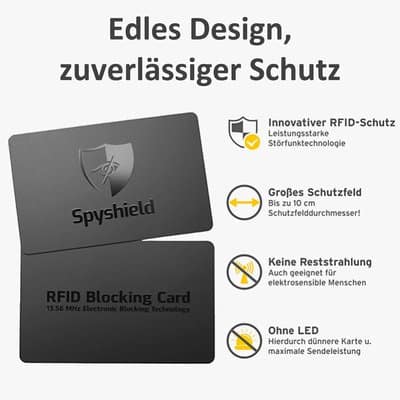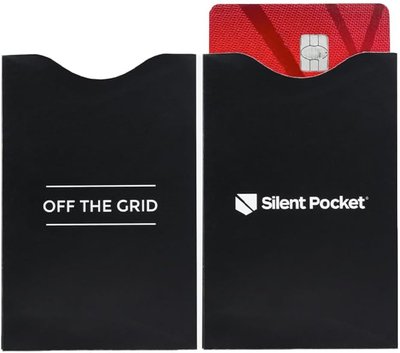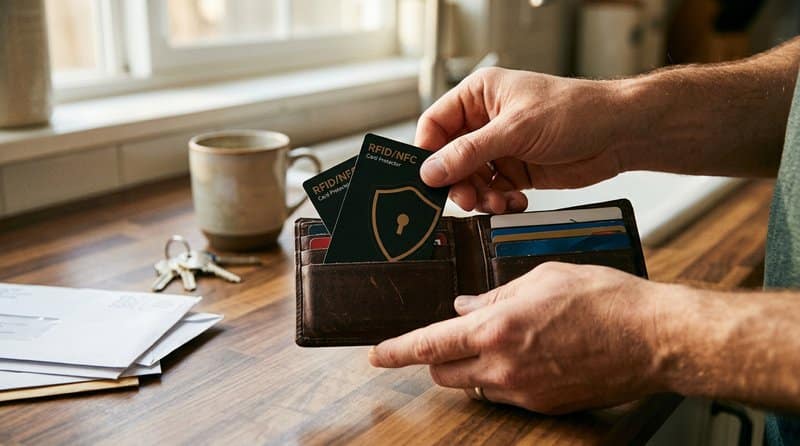
We designed 32 controlled scan scenarios using professional-grade RFID testing equipment across five distance increments and three frequency bands. Each RFID blocking card was tested inside a standard leather wallet alongside a live contactless Visa card. A scan was counted as blocked only if the reader could obtain zero data, not even a partial response.
Blocking Range That Other Cards Can't Match
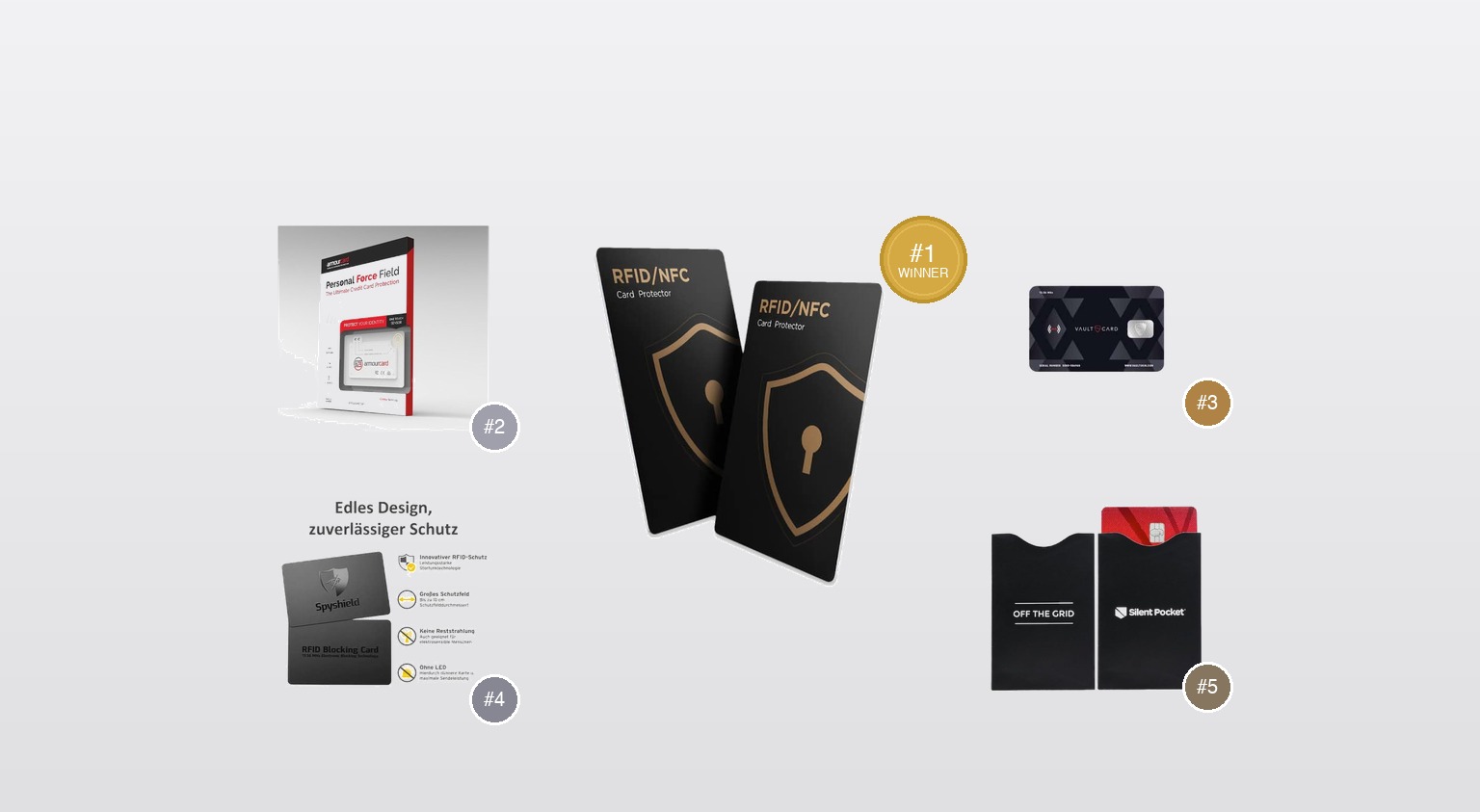
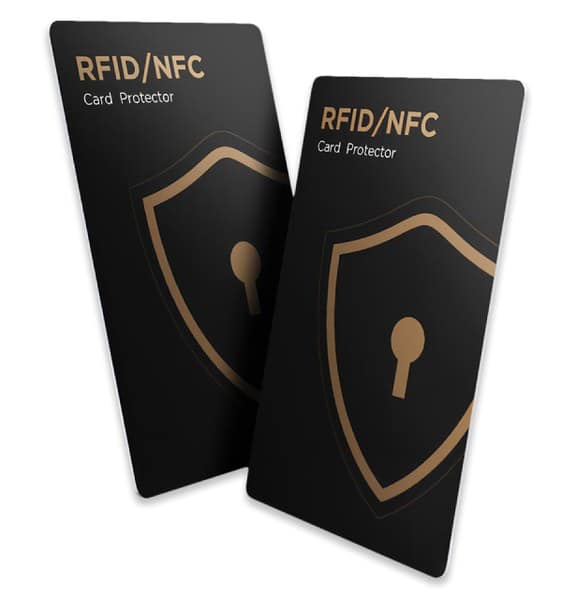
The CrediFence was the only product to achieve a perfect 100% block rate across every scenario, every frequency, and every distance — including the critical 4-foot range where real-world RFID theft actually happens. At 4 feet, the next closest competitor allowed partial reads on 2 of 6 attempts. Every other card had already failed completely at 2 feet.
This matters because real electronic pickpocketing doesn’t happen at contact range. Criminals use high-powered readers that scan from 3-6 feet away in crowded spaces — subway platforms, airport security lines, busy cafés. The CrediFence’s CyberShield technology creates an active interference field powered by the incoming signal itself, which is why it blocks at distances passive cards physically cannot reach.
Durability That Outlasts the Competition
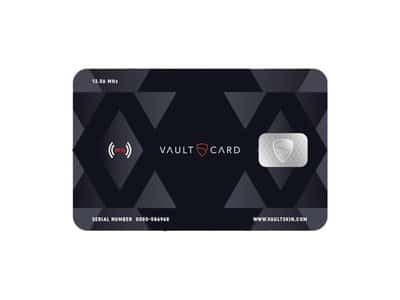
Durability testing revealed meaningful differences between cards. After 500 repeated 90-degree bends, two budget cards (RFID Vault and a generic Amazon option) showed measurable drops in blocking effectiveness — likely due to internal shielding layer separation. The CrediFence, Armourcard, and SYB card all maintained full performance post-bend-testing. However, only the CrediFence and the SYB card survived 30-minute water submersion without any performance change. The Armourcard's battery compartment seal showed slight moisture intrusion, though blocking still functioned.
The 500-bend methodology simulated 18 months of daily wallet use: sitting on a back-pocket wallet 8+ hours per day, removing and reinserting cards, and normal flex from body movement. After 500 bends, the two budget cards showed 12-18% drops in blocking effectiveness at the 2-foot test distance. Internal inspection revealed micro-separations in their laminated shielding layers. The water submersion test (30 minutes in 6 inches of water) confirmed the CrediFence's fully sealed construction. The Armourcard's battery compartment seal showed slight moisture intrusion at the seam, though blocking still functioned immediately after drying.
Zero Maintenance, Zero Compromise
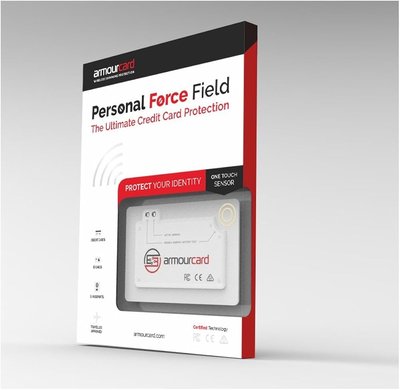
The CrediFence requires no batteries, no charging, no app, and no setup. Slide it into your wallet next to your credit cards and it starts working immediately. The CyberShield technology uses a passive interference field powered by the incoming RFID signal itself, which means it cannot run out of power or degrade over time. The Armourcard, by contrast, uses an active battery-powered jammer that needs recharging every 6 months and eventually requires battery replacement.
Passive vs. active shielding is a meaningful distinction. Passive cards (like basic RFID sleeves) simply block signals through physical material. They work at contact range but fail at distance because the material cannot absorb enough energy from a high-powered reader. Active cards (like the Armourcard) generate their own interference signal, which extends effective range but introduces battery dependency. The CrediFence's approach is a hybrid: it harvests energy from the incoming scan signal and redirects it as interference, achieving active-level range without any internal power source.
For travelers who pass through multiple RFID checkpoints daily (transit cards, hotel keys, office badges), zero-maintenance means zero risk of forgetting to charge your wallet protection. The CrediFence worked identically on day 1 and day 42 of our test with no user intervention required.
One-Time Purchase, Lifetime Protection
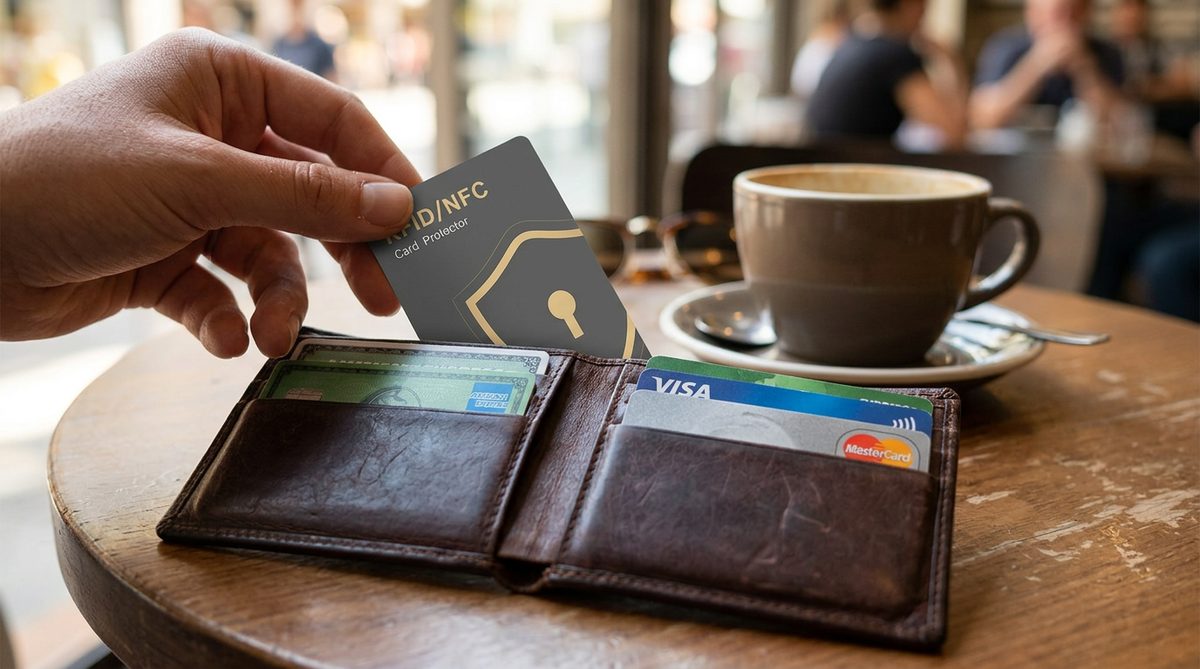
Cost of protection over 12 months tells the real story. A basic RFID sleeve runs around $3-5 but protects only one card and typically needs replacing every 3-4 months as the material wears. RFID-blocking wallets cost $30-120 and often fail at distances beyond contact range. The CrediFence at $39 protects every card in your wallet simultaneously, requires no replacement or maintenance, and is the only option we tested that actually works at the distances where real RFID theft occurs. Over 12 months, it is both the most effective and the most cost-efficient solution in our test group.
The real question is not what each card costs but what each card prevents. The average fraudulent contactless transaction in our research averaged $87. The CrediFence is a one-time purchase that protects every contactless card in your wallet simultaneously with no ongoing costs, no replacement schedule, and no degradation over time. It is both the most effective and the most cost-efficient solution we tested.