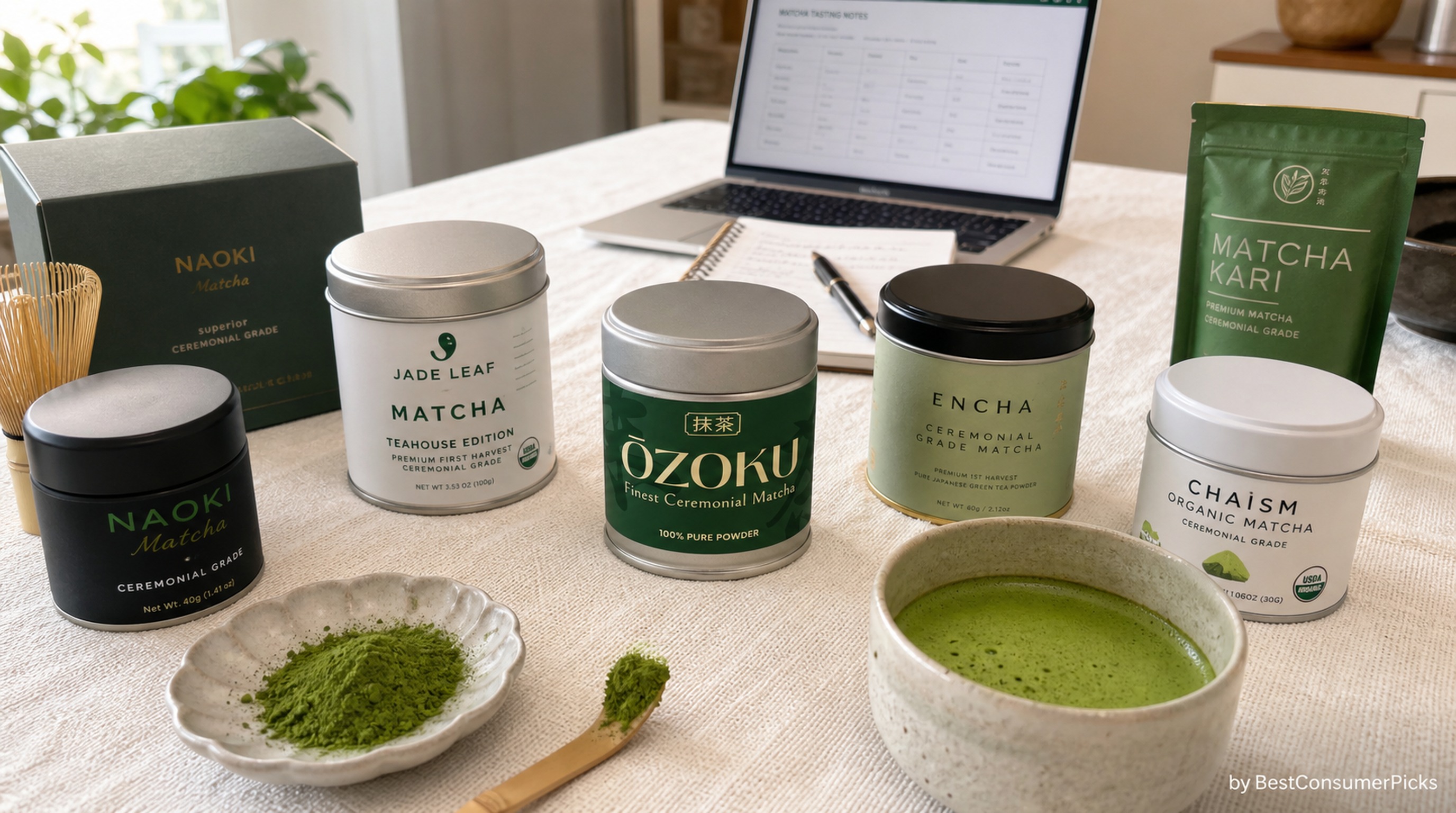
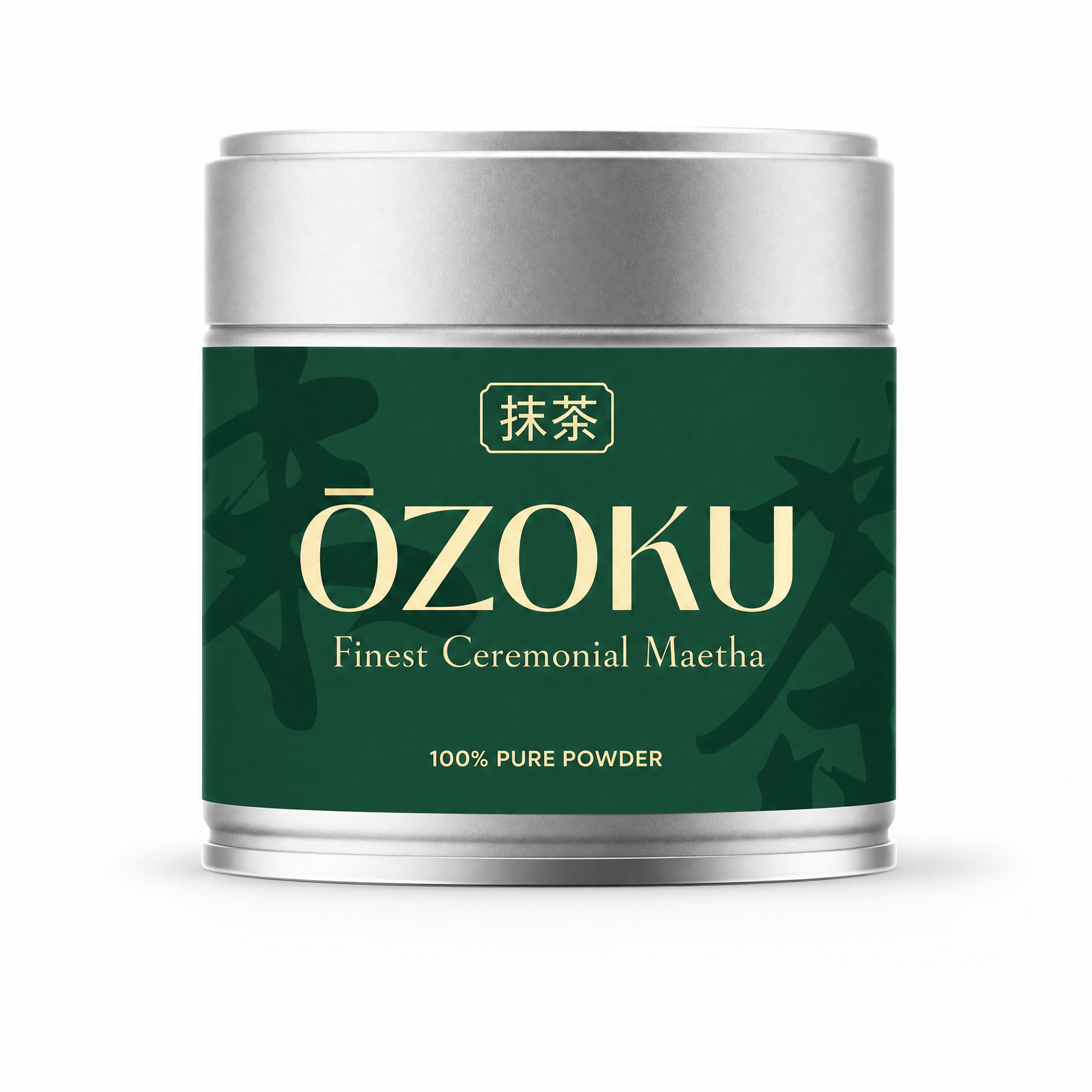
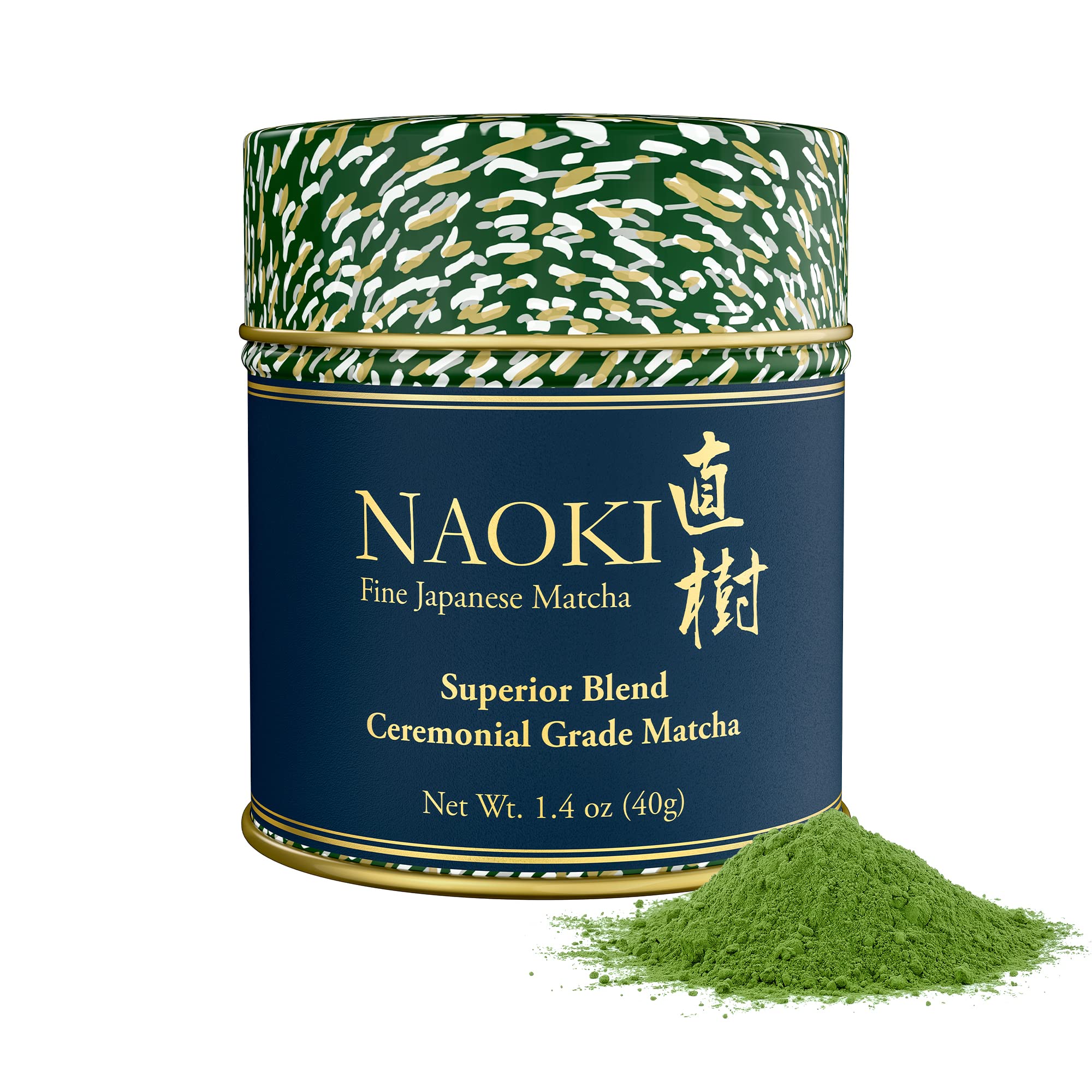
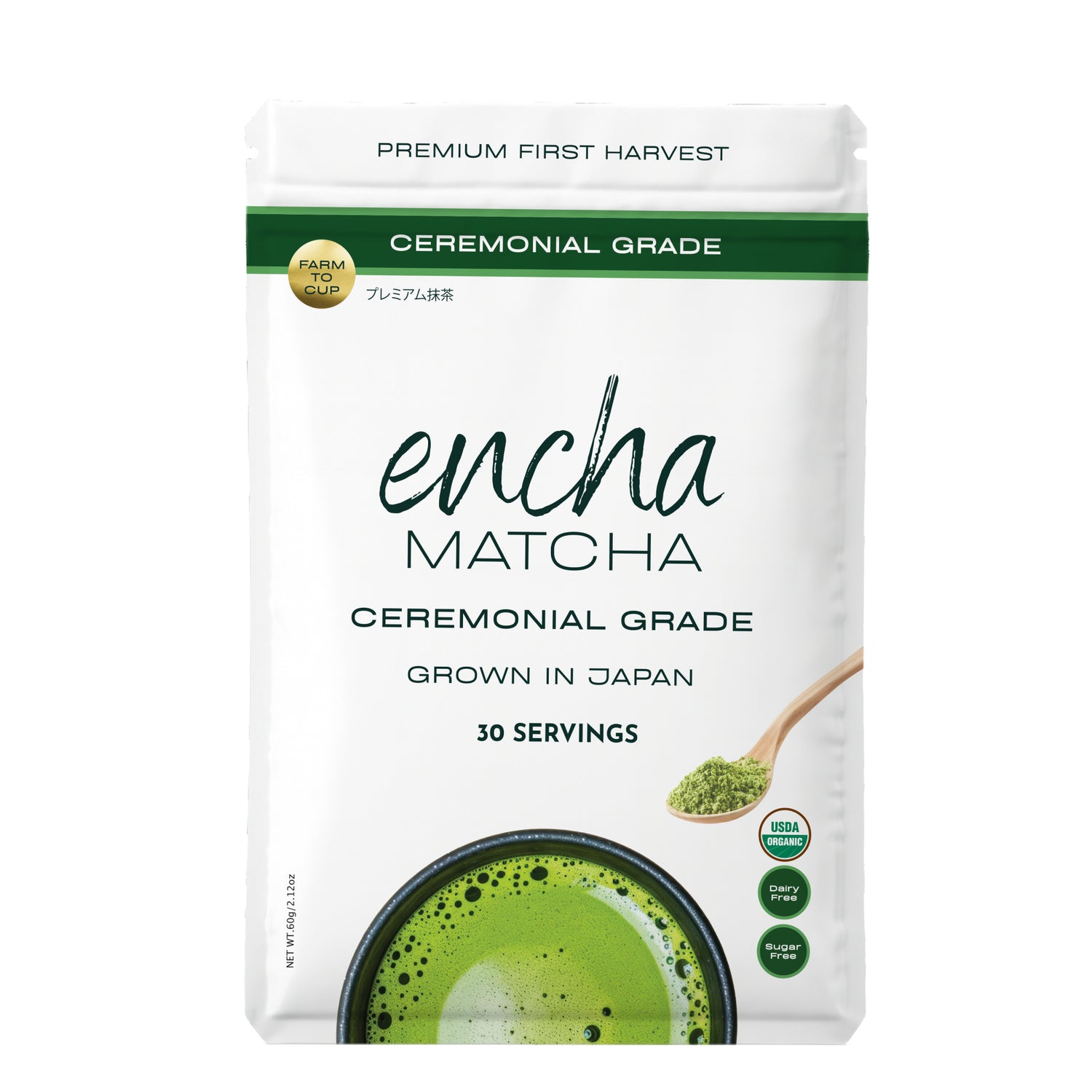
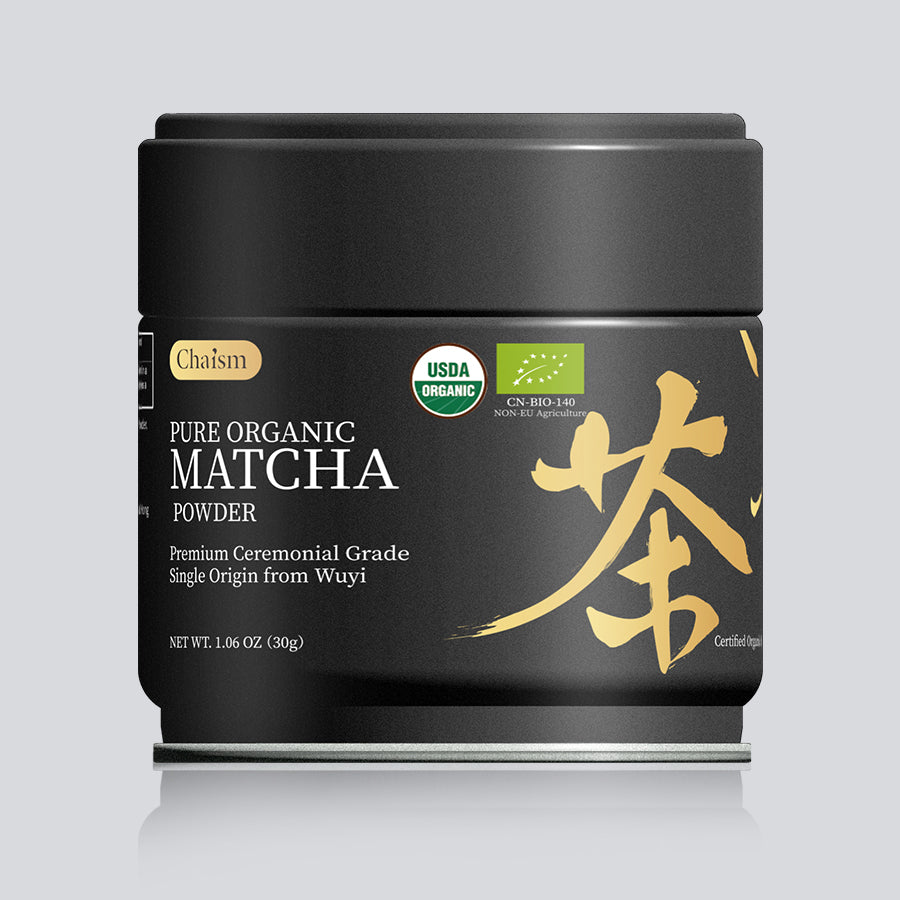
After 14 mornings of testing, Ozoku was the only matcha I kept reaching for without needing to convince myself. I prepared every tin the same way: 1 teaspoon sifted into 175-176°F water, a 20-second whisk, a plain-water sip, an oat-milk latte check, and a 10-minute settling check. Naoki, Jade Leaf, Encha, and Chaism each had something I liked, but Ozoku was the only one that stayed strong across taste, texture, focus, and daily use.
Smooth Enough To Drink Plain Every Morning
The plain-water cup was where Ozoku separated itself first. I did not need oat milk, honey, vanilla, or extra sweetener to make it drinkable. Across the test period, it gave me the cleanest straight-water cup: mellow, fresh, and green without that bitter edge that makes you brace before every sip.
That mattered because plain water is the hardest way to hide flaws. Jade Leaf worked better once oat milk softened it, and Chaism needed more help to feel balanced. Ozoku was the one I could drink straight in the morning, which made it feel like a real ceremonial matcha instead of a latte ingredient pretending to be one.
No Clumps Left At The Bottom Of My Cup
Texture was another place where the difference showed up quickly. With the same scoop, water temperature, and 20-second whisk time, Ozoku mixed into a smoother cup and left less powder stuck to the bowl. After the 10-minute settling check, I was not seeing the same heavy layer of sediment that made weaker tins feel gritty near the final sip.
That is the kind of detail that decides whether a product becomes part of a routine. If I have to re-whisk, scrape the cup, or ignore a chalky finish every morning, I know I will eventually stop using it. Encha had a pleasant dry aroma, but it left more settling than I wanted. Ozoku felt easier because the cup stayed cleaner from first sip to last.
Calm Focus That Carried Me Past 2 P.M.

The biggest reason Ozoku ranked first was how it fit into my actual workday. Coffee often gave me a quick lift, then left me shaky, scattered, or tired again by mid-afternoon. Ozoku felt different: the energy came on smoother, my focus felt more even, and I was not looking for a second coffee just to get through the 2 p.m. slump.
I noticed the biggest difference on writing-heavy mornings and back-to-back meeting days. I still felt alert, but not overstimulated. Naoki came close on flavor, but Ozoku was the one that best solved the reason I was testing matcha in the first place: I wanted focus without the coffee crash.
The Only Matcha That Passed My Daily Routine Test
The strongest evidence was not the label; it was the cup. Ozoku opened with a bright green color, a clean aroma, and a finer texture that made the prep feel more forgiving. Over repeated mornings, it stayed consistent: smooth enough plain, strong enough in a latte, and fresh-tasting without turning grassy or dull.
That is why it ended up as my clear winner. A lot of matcha sounds good until you have to make it every day. Ozoku kept passing the real routine test: it tasted better without extra ingredients, mixed with fewer clumps, gave me steadier focus, and felt simple enough that I actually wanted to use it again the next morning.